
Guide
PVZ Fusion Beginner Guide: Your First Fusions
Start PVZ Fusion the right way: the Sunshooter lesson, sun economy basics, safe first recipes, and the beginner mistakes that end runs early.
 By Felix Wagner, Mobile Game Reviewer
ALMANAC On this page
Fusion Is the Whole Game
Fusion is the system that turns a familiar lawn defense into a building game: in PVZ Fusion, any two compatible plants sharing one tile merge into a hybrid that keeps both parents' abilities. The PVZ Fusion APK opens with that idea in its first Adventure level, and everything else in the game, the almanac, the tiers, the modes, is an extension of it. If you learn only one habit in your first hour, learn to see every plant as an ingredient.
That shift changes how a lawn reads. In the original game a tile was a finished decision. Here a tile is a promise: a Sunflower planted early is not just income, it is half of a Sunshooter waiting for its partner. Beginners who plant every tile with a finished defender run out of room to build. Beginners who leave the back rows as a workshop end the level with defenders the game never handed them directly.
The Sunshooter Lesson
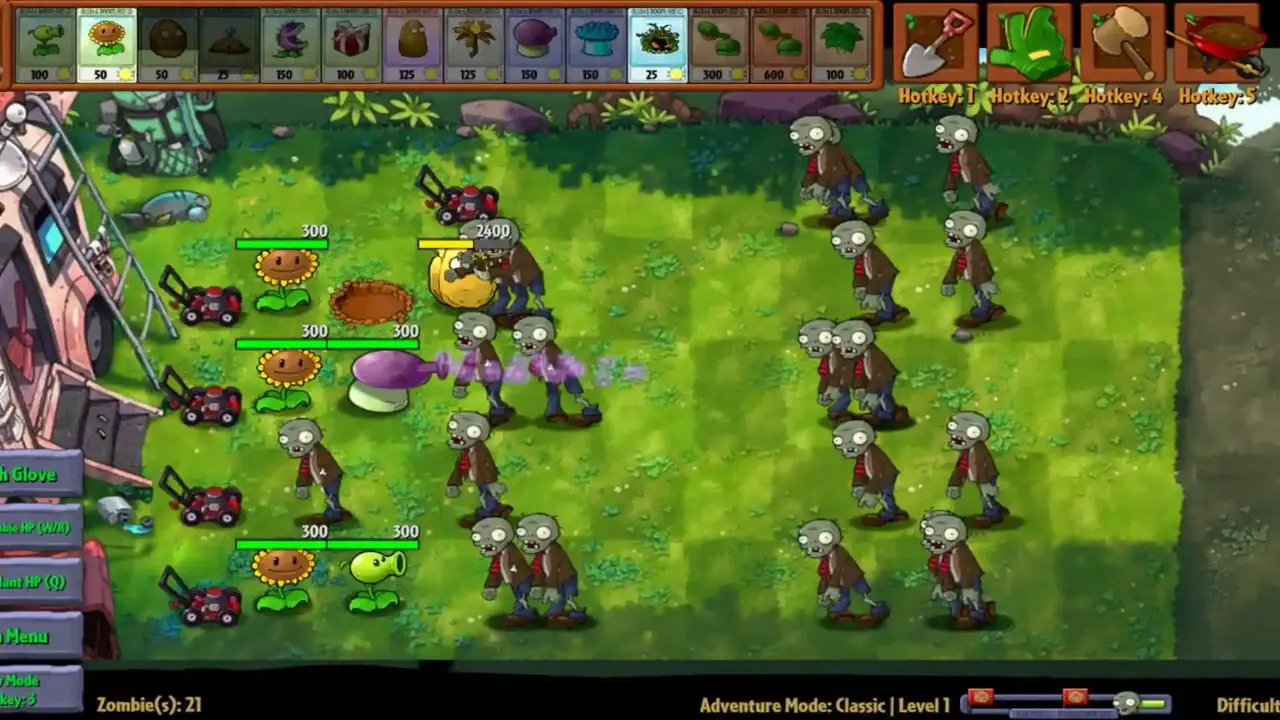
The tutorial's first recipe is the game's thesis in one plant. Plant a Sunflower, let it settle, then plant a Peashooter on the same tile. The two merge into a Sunshooter, which fires peas down the lane while it keeps producing sun. One tile now pays for itself and defends itself, which is the exact trade the whole fusion system is built on.
Practice the rhythm the tutorial teaches: economy first, fusion second, expansion third. Two Sunshooters in the back columns will fund a lawn and hold early lanes at the same time, freeing your remaining sun for the expensive hybrids you actually want to experiment with. The Sunshooter guide goes deeper on placement once the basics feel natural.
Sun Economy for Fusers
Fusion is hungry. Every hybrid costs the sun of both parents, and a tier-two fusion has quietly eaten four plants' worth of sunlight before it fires a shot. New players lose runs not because their fusions are weak but because they built one beautiful hybrid while three lanes stood empty. The rule that prevents it: never let a fusion drop you below the cost of an emergency defender.
Keep a reserve. A Cherry Bomb class answer or a simple Wall-nut in hand turns a surprise wave from a disaster into a story. As your almanac grows, the starter fusions worth building first will show you which recipes repay their sun fastest, because early on, return on sunlight matters more than raw power.
Your First Five Recipes
After the Sunshooter, four recipes carry the early game. Spike-nut, from Spikeweed and Wall-nut, is a wall that damages everything chewing it, perfect in front of shooters. Flame Peashooter, from Peashooter and Torchwood, turns single peas into splash damage for packed rows. A Snow Pea fusion line brings the slow that buys your whole lawn time. And a second Sunflower fusion in the back keeps the economy ahead of the waves.
None of these need rare plants, and all of them teach a different fusion idea: defense that fights, damage that spreads, control that slows, and economy that scales. Build each one deliberately in an easy level before you need it in a hard one. Discovery is recorded in your almanac either way, but a recipe you have aimed is worth ten you stumbled into.
Reading the Almanac Like a Recipe Book
Open the almanac after every few levels and read it the way a cook reads a recipe book, not the way a collector reads a stamp album. Every discovered entry tells you a combination that works, the parents it came from, and by silhouette, the combinations still hiding next to it. When a new plant unlocks, the almanac is where you learn what it wants to become before you waste sun finding out mid-wave.
Make a small ritual of it: one new recipe attempted per level, chosen from the almanac before the level starts. Some attempts will fail hilariously, a hybrid that answers a problem the level does not have. That is not wasted sun; that is tuition. The players with the fullest almanacs are not the ones who never misbuilt. They are the ones who misbuilt on easy levels, on purpose, where the lesson was cheap.
By the middle of Adventure, this habit compounds. You will start recognizing zombie lineups and naming the recipe that answers them before the first wave arrives. That recognition, more than any single powerful plant, is what experienced players mean when they call the game solved in the early acts, and it starts with reading a book most beginners treat as a trophy shelf.
Mistakes Every New Gardener Makes
The classic beginner error is fusing in the front line. A fusion in progress is a plant not yet doing its final job, and the front columns are exactly where zombies interrupt plans. Build in the back rows behind a line that is already holding, then let the Gardening Glove move finished hybrids forward when a lane needs them. The second error is the opposite: hoarding sun for a dream fusion while cheap waves walk through undefended lanes.
The third is ignoring the almanac. The almanac is not a trophy case; it is your recipe book, with the combinations you have proven and the silhouettes of the ones you have not. Checking it between levels is how a beginner becomes a planner. Give the game a week of short sessions and these habits settle on their own.
Quick Answers
What should my very first fusion be?
The Sunshooter: a Peashooter planted onto a Sunflower. The Adventure tutorial teaches it in level 1, and it remains useful all game because it defends a lane while paying sun.
How many plants can share one tile?
Two plants fuse into one hybrid, and that hybrid can be fused again, so a finished plant can carry several ancestors. Higher tiers can take three base plants, and Titan fusions occupy two tiles.
Is PVZ Fusion hard for new players?
The opening is gentle: Adventure teaches fusion step by step and the lowest difficulty keeps spawn rates normal. The depth arrives gradually through new tiers, modes, and hybrid zombies.
Do I need to know the original Plants vs Zombies first?
No, but it helps. Every habit from the original still works underneath; fusion simply adds a building layer on top of the lawn defense you may already know.